Tired of cavities? How smart tech helped one woman finally end her costly dental visits | Health and Wellness News
When Kavita Arora visited Dr Tejaswini Nagarkar’s dental clinic recently, she was beaming as she cleared her dental exam with flying colours. However, eight years ago, she was every dentist’s worst nightmare. A mouthful of cavities, severe gum inflammation, failing procedures, pain and anxiety, she hated keeping a dentist’s appointment. But in the last eight years, she has had no cavities. What changed?
“A simple and highly effective practice of flossing every night and never missing a dental cleaning appointment every six months,” explains Dr Tejaswini Nagarkar, chief dental surgeon, Dolphydent Dental Clinic, Porvorim, Goa. Kavita now enjoys all types of foods without any aches and chills but has significantly reduced her sugar and dairy intake. “While brushing your teeth twice daily was and remains the most recommended and basic oral care method, today’s diet and lifestyle demand an advanced approach to healthy teeth,” says Dr Nagarkar.

Floss, floss, floss
According to Dr Nagarkar, one of the most underrated oral hygiene techniques is regular flossing. This involves the use of a specially designed waxed thread to mechanically scrape the plaque from between the teeth where a toothbrush cannot reach. It is particularly useful in preventing surface cavities.
Patients with permanent tooth retainers, bridges and braces cannot use a regular floss. This can be easily overcome by a floss threader, a flexible plastic loop with a stiff end that allows the floss to be carried under the braces/wires and under joint crowns. Another option is the ‘superfloss’, which combines three unique components in one pre-cut strand: a stiffened end for threading under braces and bridges, a spongy section for wide spaces, and regular floss for general cleaning. “This smart floss has universal applications but works more specifically for braces and prosthetic treatments,” adds Dr Nagarkar.
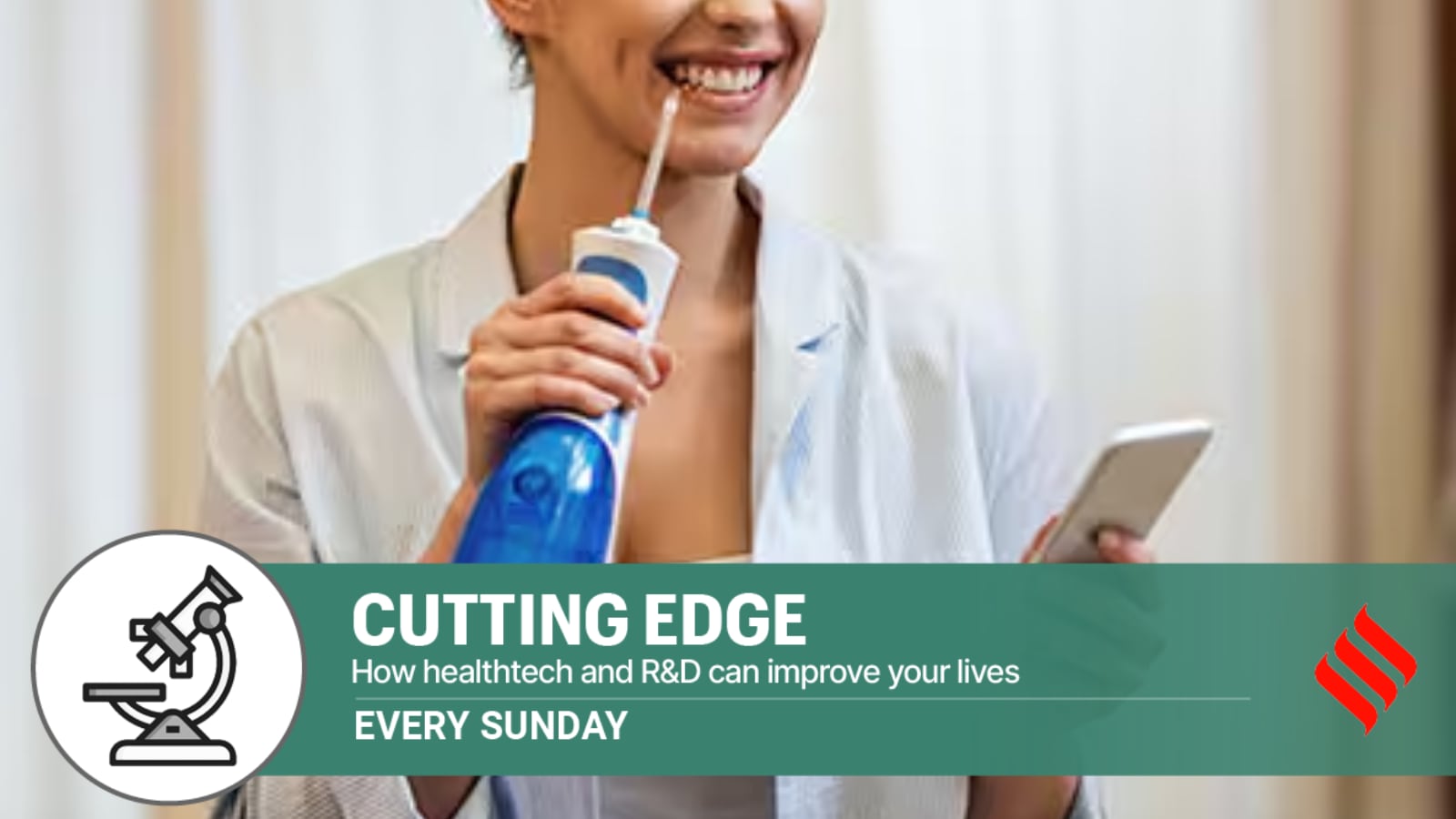
While traditional string flosses can be taxing for some people, a water flosser, she adds, can be an excellent starter in dental care. It works by pumping a pulsating stream of water into the gums and between the teeth to flush out plaque and food particles. “With a choice of multiple nozzles, different pressure settings to suit individual needs, this oral irrigator works very well, especially for people with braces, implants, crowns and bridges. It is not a substitute for traditional flossing but a complementary tool,” explains Dr Nagarkar.
A brush with technology
Electric toothbrushes with oscillating or sonic action deliver consistent pressure and ensure superior plaque removal. “These are especially useful for the geriatric and pediatric populations,” explains Dr Ruchir Kalra, Smile Enhancer at Dr Sanjay Kalra’s Multispeciality Dental Clinic, Panchkula. “There are two broad categories of powered brushes, oscillating and sonic. In the first variant, the bristles rotate in a circular motion around the teeth and remove plaque. The sonic brushes use sonic waves to vibrate the brush, in the range of 40,000 vibrations per minute on average, and gently clean your teeth and gums. Sonic toothbrushes are kinder on the gums and teeth.
“A dentist can assess individual needs and help you choose the correct toothbrush. For instance, a sonic brush would be a better choice for a person with pre-existing gum recession, bleeding, or sensitive teeth. But a young patient in her 30s with no inflammation in gums may do well with an oscillating toothbrush. Both are effective for plaque control, as compared to manual brushes. For patients who have wide interdental spaces and where food lodgment is a regular problem, a handy, cost-effective alternative is an interdental toothbrush. These disposable variants work like miniature bottle cleaners but should not be used aggressively,” explains Dr Nagarkar.
Story continues below this ad
Dr Sandeep Dev, head of department, Fortis Hospital, Mohali, says another high-tech device is the smart toothbrush that is IoT-enabled. It uses embedded sensors and software to collect data about your brushing habits and sends it over the internet to be analysed by an app, thus providing personalised feedback and tips for improving your brushing technique. “The Y Brush is an automatic electric toothbrush that uses a unique Y-shaped head to clean all teeth simultaneously in just 20 seconds. Meanwhile, the air flow machine uses water pressure, air and high-resolution cleaning powder. It effectively eliminates microbial plaque and teeth stains caused by tea or coffee,” adds Dr Dev.
The laser’s edge
Laser dentistry, explains Dr Dev, uses focussed beams of light energy to treat a variety of dental conditions affecting both hard tissues (teeth and bone) and soft tissues (gums and other soft tissues). “It is a minimally invasive approach which offers several advantages over traditional methods, including reduced pain and discomfort, minimal or no bleeding, faster healing, and thus a faster recovery. It reduces the microbial count by removing diseased and infected gum tissue from the pockets around the teeth in a minimally invasive way, while laser tooth whitening uses a high-intensity laser to accelerate the bleaching process. There are also laser treatments and therapy for oral ulcers, lesions to stimulate healing, and reduce pain and inflammation in oral tissues,” says Dr Dev.
Role of antimicrobial mouthwashes
Of late, Dr Dev has been prescribing these as an adjunct to regular brushing and flossing to help control or reduce bacteria, viruses, and fungi in the mouth. “These should be recommended for short-term use only because they can cause teeth staining over a period, alter taste sensation, and irritate oral tissues. So, aloe vera-based mouthwashes can be a viable alternative to these chemical-based rinses for reducing plaque and gingivitis. Aloe Vera’s anti-inflammatory properties, regenerative qualities, and natural antibacterial and antifungal components give it an edge above chemical-based mouthwashes. A big no-no is alcohol-based mouthwashes, as these can cause dry mouth, burning sensation and disrupt the oral microbiome,” says Dr Dev.
Back to basics
Preventive dentistry doesn’t have to be expensive or fancy, says Dr Nagarkar, and should begin with regular dental checkups from early childhood and periodic follow-ups. “Our diet matters a lot as far as the oral microbiome is concerned, and therefore, mindful eating goes a long way to avoid dental problems,” she says. Research has even linked gum disease, which triggers inflammation, to heart problems, diabetes, and respiratory issues.
Story continues below this ad
“Limit your intake of sugary and acidic foods and drinks, as sugar converts to acid, which erodes the tooth enamel. Drink plenty of water to keep yourself hydrated and visit your dentist for a checkup and cleaning every six months. Besides, during a routine checkup, a dentist performs an oral cancer screening by examining the neck, tongue and other oral tissues for any unusual lumps, lesions or abnormalities,” says Dr Dev.
link